
Timeshare Resale Market
Timeshare Resale Market is, just as the name promises, a platform dedicated to listing and selling timeshares. In theory, it sounds like a straightforward solution for owners looking to offload an unwanted contract. But as we’ve repeatedly seen across the entire resale industry, selling a timeshare is one of the riskiest and least effective ways to exit. Buyers are scarce, offers are inconsistent, and the market itself is notoriously unpredictable.
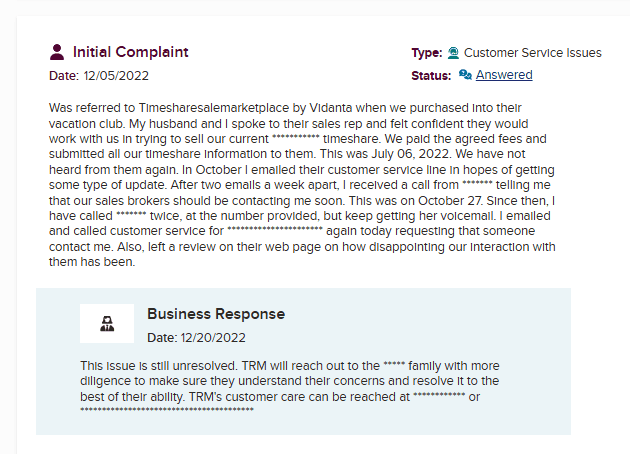
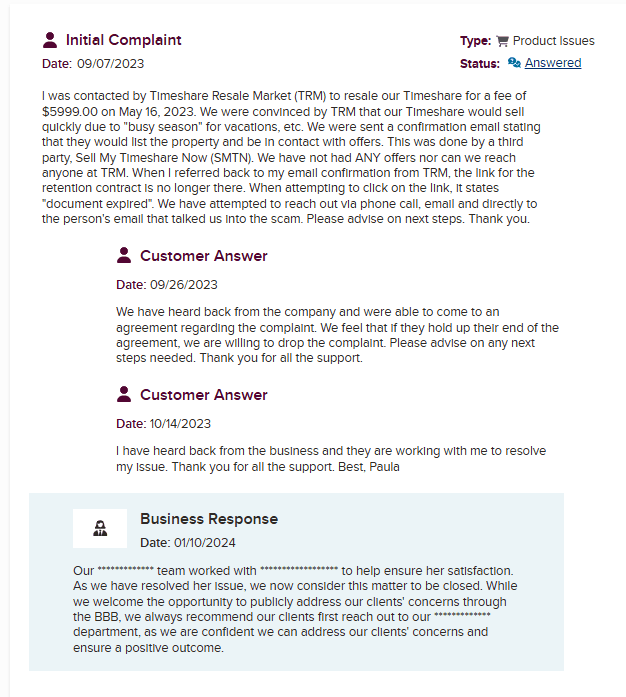
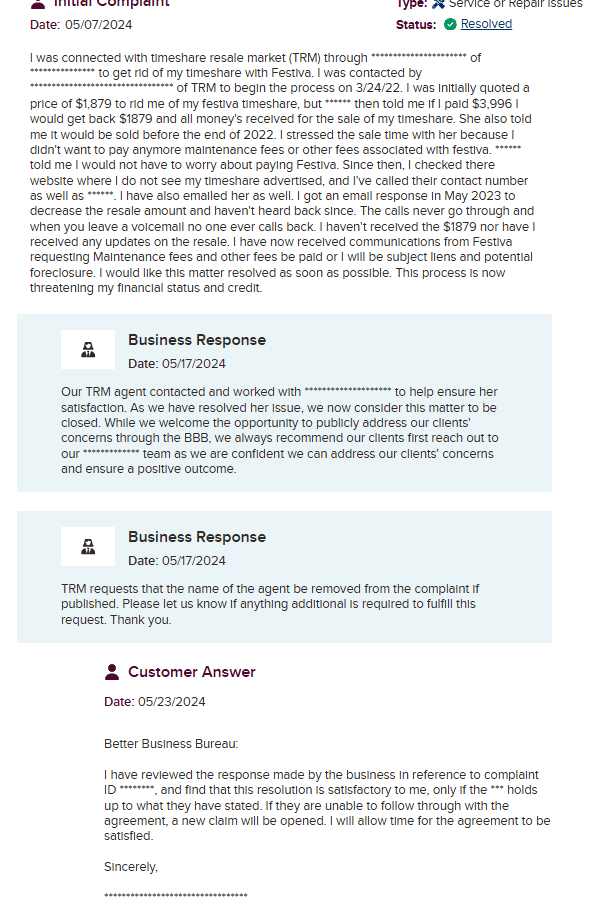
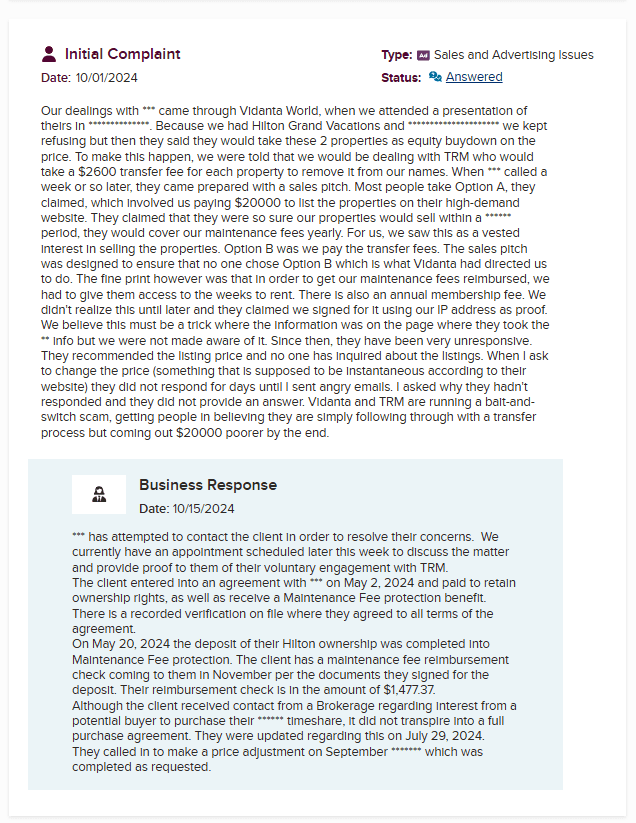
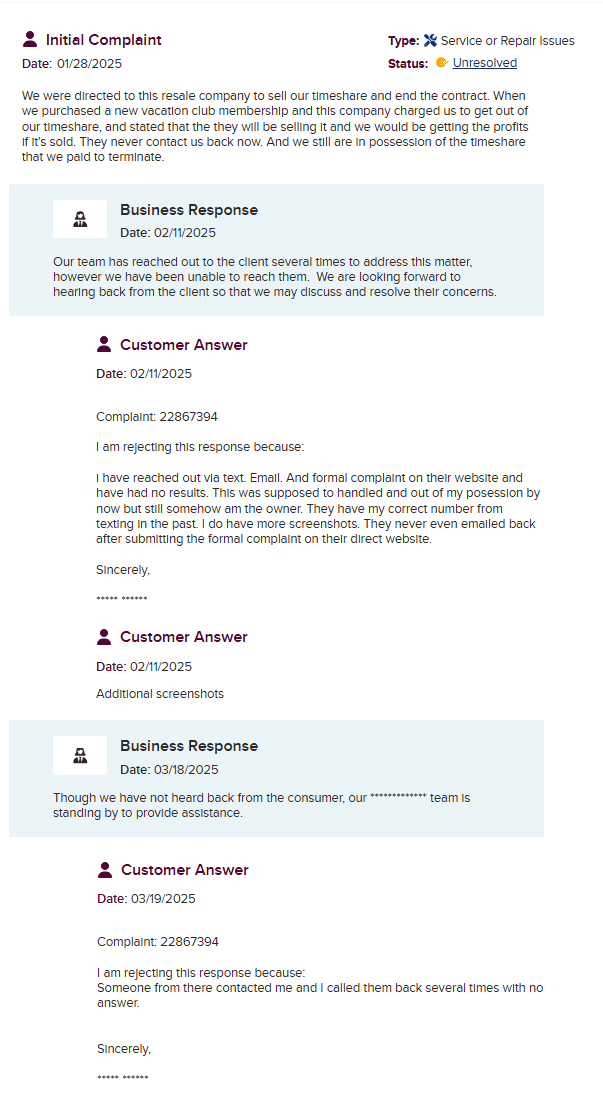
And unfortunately, Timeshare Resale Market (TRM) seems to struggle with those very same systemic issues. Many users report paying upfront fees only to have their property sit on the website for years without a single viable offer. The most common complaint? Long periods of silence from TRM—no updates, no feedback, and no signs that their listing is moving at all.
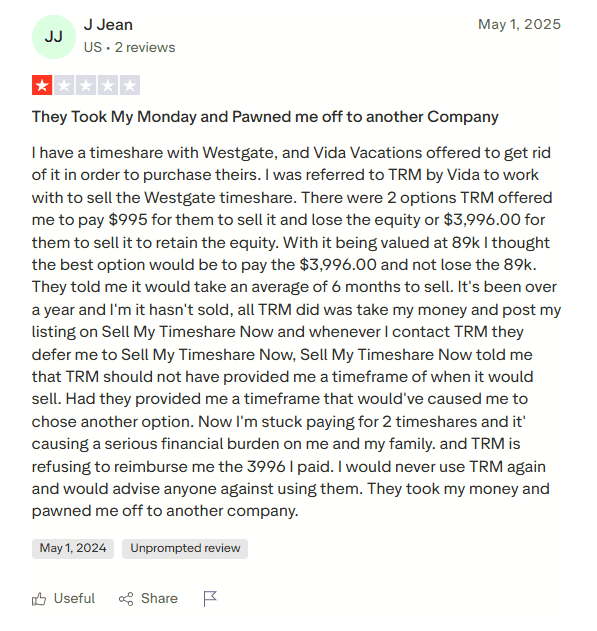
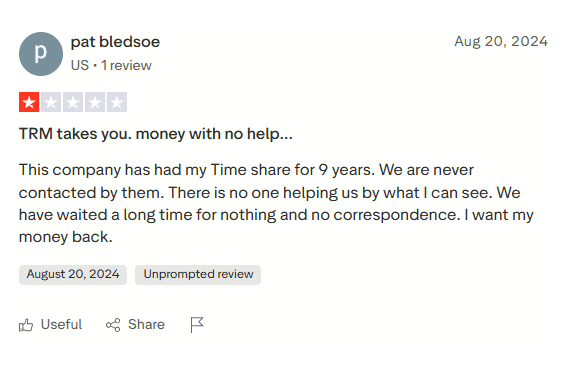
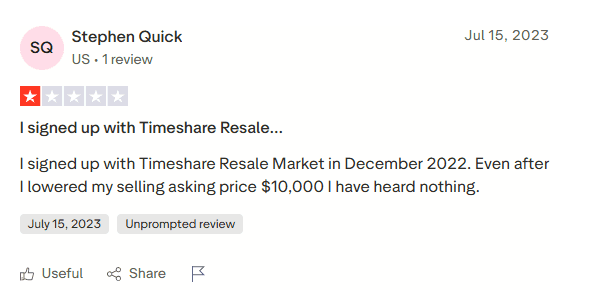
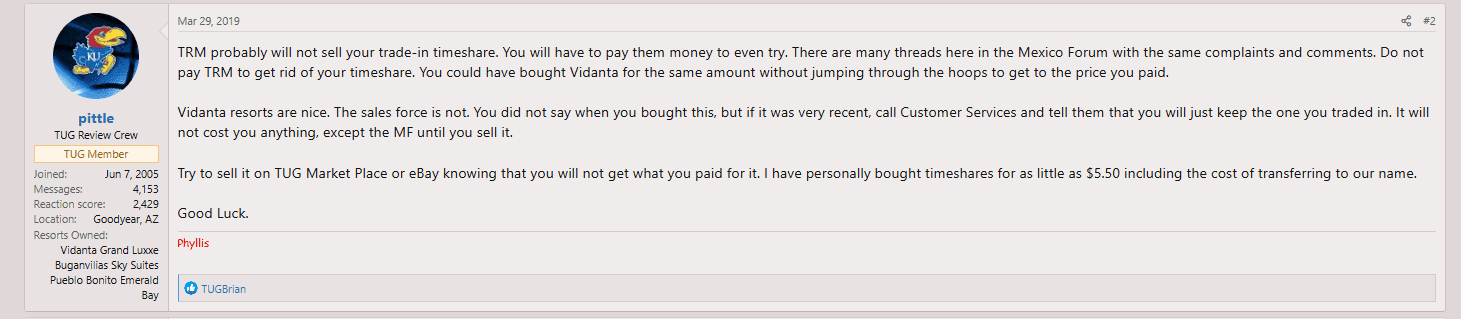
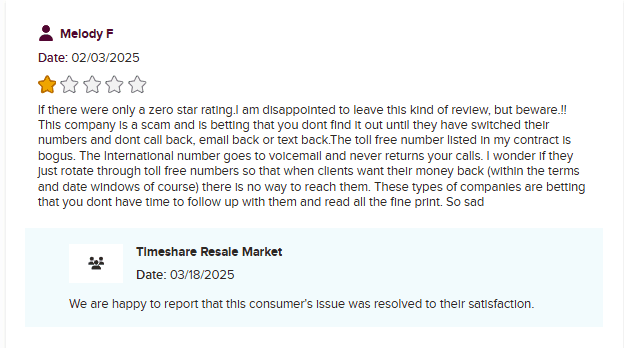
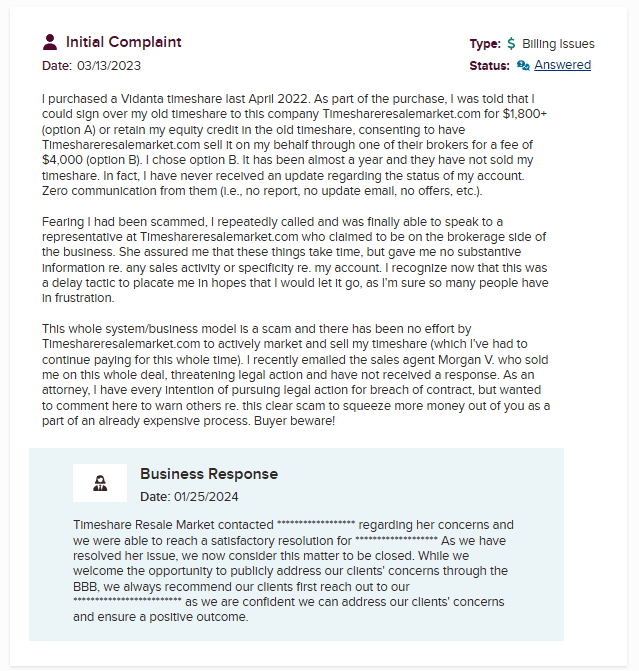
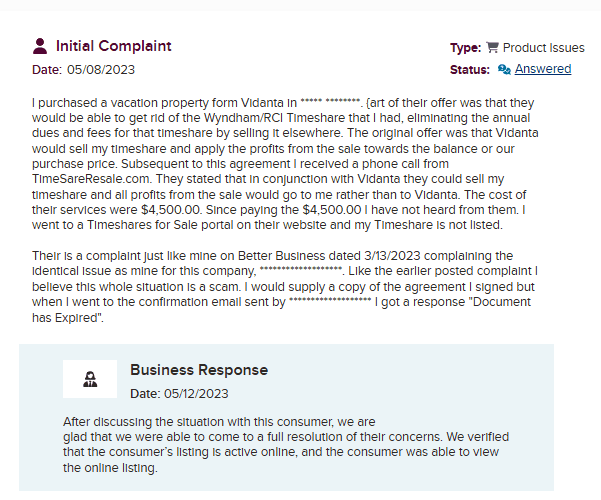
While the Better Business Bureau doesn’t show many traditional “reviews,” the complaint section tells a more revealing story. Owners express frustration with transfers, listings, and even timeshares they purchased through TRM that never turned out as promised. The pattern mirrors what we’ve seen across most resale platforms: inconsistent communication, unpredictable outcomes, and the unavoidable limitations of the resale market itself.
TRM’s website does work as intended from a technical standpoint. It functions as a marketplace where owners can post their timeshares, and there’s even a live feed showing ongoing rentals and sales. Users can set their own asking prices, which makes it look like a flexible and appealing tool—on paper, at least.
But as we always say, relying on resales as an exit method is not something we recommend. The problems here aren’t just about TRM; they stem from the reality of the timeshare resale industry as a whole. Whether it’s TRM or SellMyTimeshareNow (a company TRM is often associated with), the results tend to be the same: slow, uncertain, and rarely satisfying for owners who urgently need an exit.
To be fair, TRM appears to resolve complaints on the BBB when they’re pushed to respond, and user satisfaction after resolutions is generally neutral. They don’t come across as outright fraudulent—just inconsistent, like most businesses operating in the resale space. That leaves us with a “proceed with caution” verdict. If someone is set on trying to sell their timeshare, TRM is no better or worse than similar platforms—but certainly not a reliable exit strategy.
In the end, deciding whether to contact them comes down to how much time, patience, and optimism someone has left. And given the nature of the resale market, optimism tends to run out long before results appear.