
Lonestar Transfer
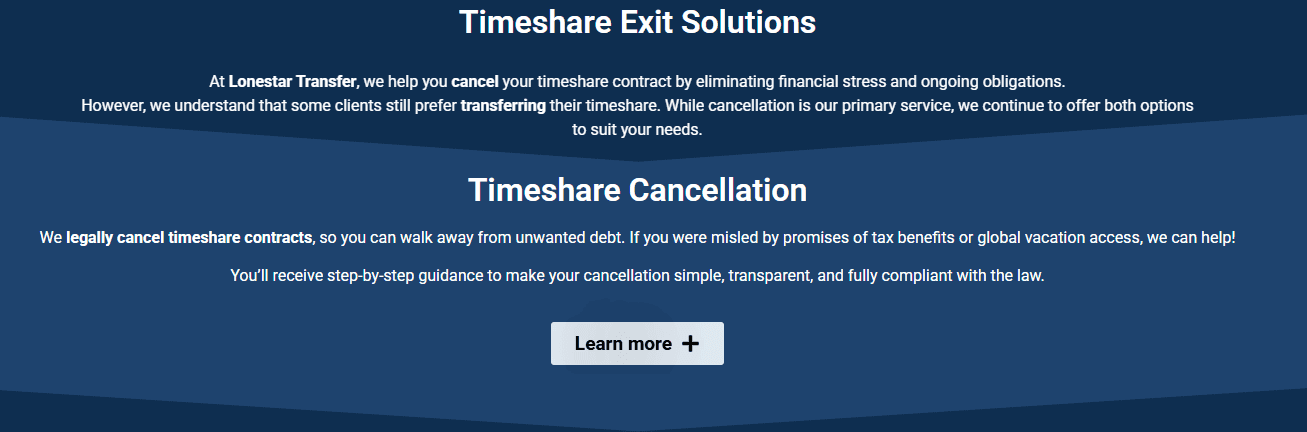
Lonestar Transfer, as their name suggests, is an exit company that specializes in transferring timeshares. This is their primary method of helping users get out of a timeshare, though they also offer what they describe as a mortgage cancellation service.
However, right away, we notice something worth paying attention to. Lonestar tends to frame this mortgage cancellation as a “timeshare cancellation,” which can be misleading. The wording is somewhat obtuse, and it may confuse potential clients into thinking their entire timeshare obligation is being terminated—when in reality, it may only be the financing tied to it. That distinction matters more than it seems at first glance.

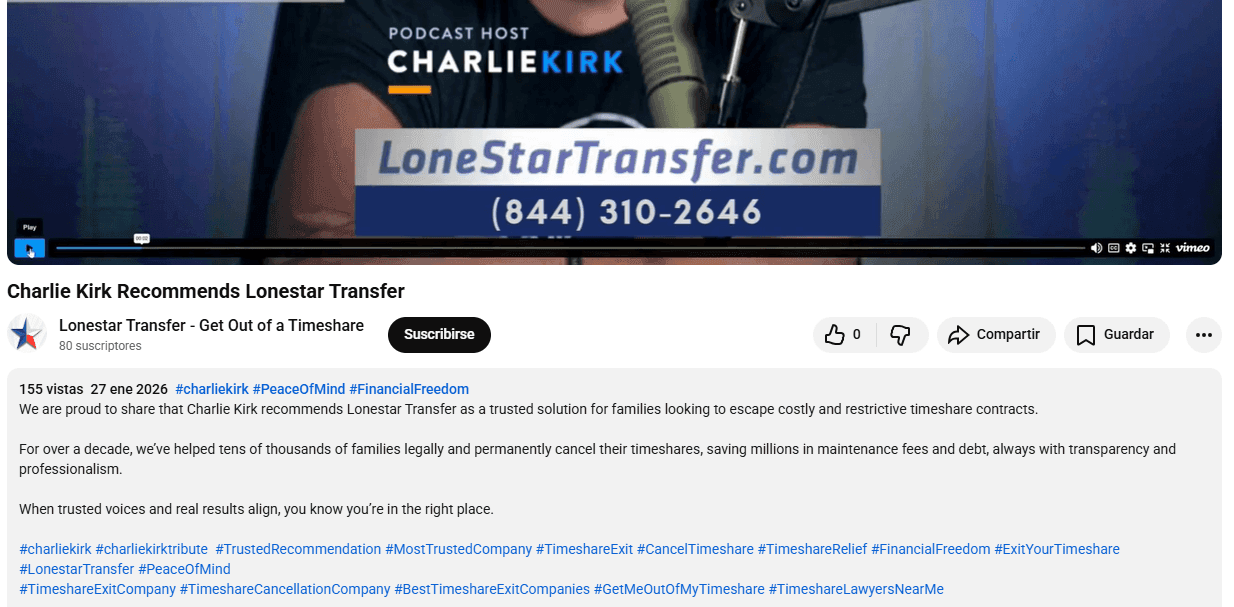
They also appear to be endorsed by several public figures, including Charlie Kirk. There is a video on YouTube dated January 27th, 2026, featuring him. However, for those familiar with recent events surrounding him, that date raises questions. Whether this is recycled content or something else entirely is unclear, but it does introduce an inconsistency that we can’t ignore.
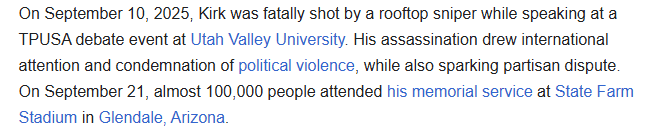
Additionally, Lonestar claims to have been featured on major media outlets such as Discovery and Fox Business. As with many companies in this space, these claims are difficult to independently verify. Without clear sourcing or direct references, it’s something we recommend taking with a grain of salt.
Like many other exit companies, they advertise a money-back guarantee. But here’s where things become a bit vague. They don’t clearly define a timeframe for completing a timeshare exit. Most reputable companies will at least outline an estimated period—commonly around 36 months—and specify what happens if that deadline isn’t met. In this case, Lonestar leaves that window open-ended. That lack of clarity could potentially be used as a loophole, allowing the process to drag on indefinitely without accountability. It’s not definitive proof of wrongdoing, but it is something we would flag for caution.

When we shift our attention to their online reputation, things become more complicated.
Lonestar Transfer appears to have a notable history of questionable reviews. Yelp, for instance, reportedly removed over 300 reviews from their page—something that doesn’t happen lightly. Out of the 323 removed reviews, only 8 reviews were confirmed legitimate. This is particularly striking given that the company has been public for a long while. It raises a reasonable question: if that many reviews were filtered out, how reliable are the overwhelmingly positive ratings seen on platforms like TripAdvisor or the BBB?




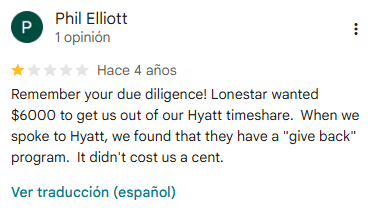
Interestingly, aside from Yelp, there doesn’t seem to be a strong presence of negative press. Their BBB profile appears clean, even when it comes to formal complaints. However, this contrasts with their Google reviews, where a more noticeable number of dissatisfied customers can be found. That inconsistency across platforms is something we always encourage readers to examine closely.
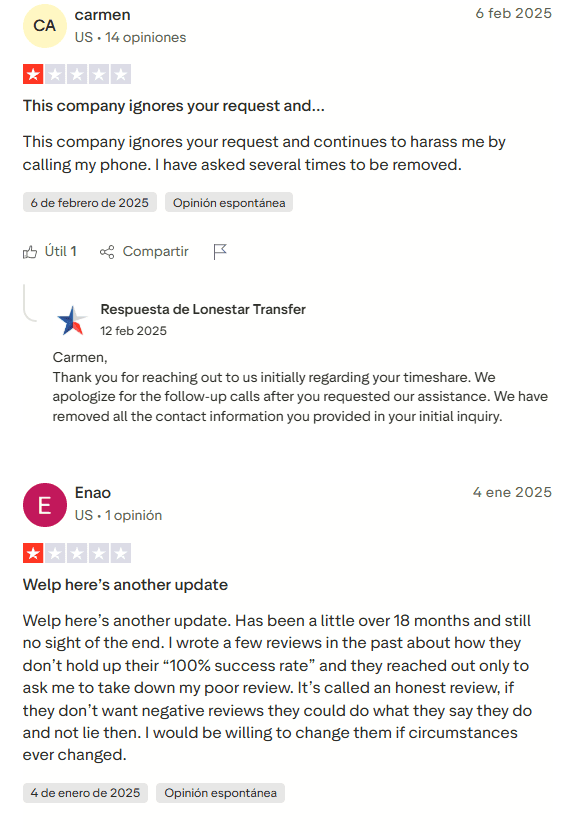
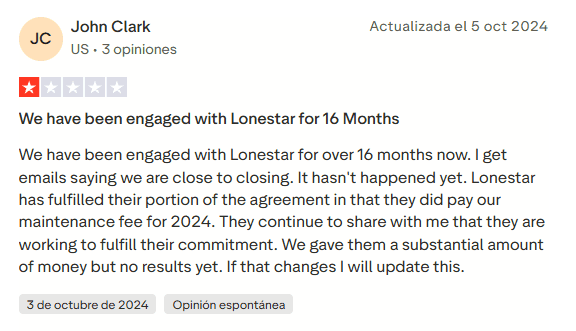

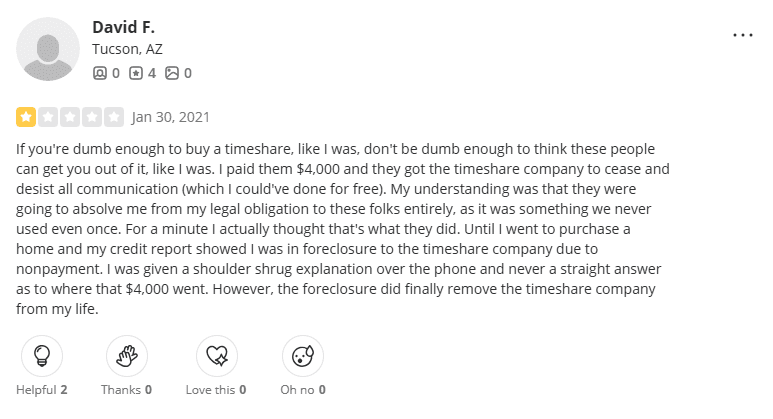

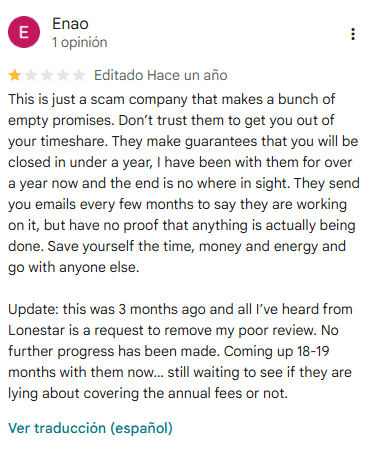
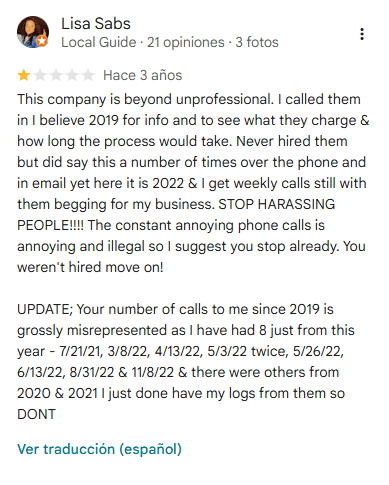


Another recurring issue mentioned by users is persistent communication. There are reports of Lonestar retaining customer information and continuing to make calls—even if the individual never officially hired their services, or even after interactions have ended. This has understandably frustrated many users and is something we consider an important quality-of-service concern.
Looking at how their service operates, user feedback suggests that Lonestar may require upfront payment. This is a critical point.
Paying upfront for timeshare exit services is generally not recommended. There are numerous cases across the industry where companies collect fees and then fail to deliver meaningful results. While this doesn’t automatically mean Lonestar engages in such practices, it does place them within a higher-risk category that consumers should approach carefully.
Additionally, the timeframe for successfully exiting a timeshare appears to vary significantly based on user experiences. Without a clearly defined structure or expectations, clients may find themselves uncertain about progress—or lack thereof.
Final Thoughts
At first glance, Lonestar Transfer presents itself as a trustworthy and established company. They showcase strong positive reviews, claim media recognition, and even feature endorsements from well-known figures. On the surface, it’s a compelling image.
But as we look a little closer, that image starts to show cracks.
Between the vague timelines, potentially misleading wording, questions surrounding endorsements, and concerns about review authenticity, there are enough inconsistencies for us to recommend caution. Not everything lines up as cleanly as it first appears.
That doesn’t necessarily mean the company is illegitimate—but it does mean that, as always, we advise doing thorough research, asking direct questions, and avoiding any agreements that feel unclear or rushed.
Our stance: proceed carefully, verify everything, and don’t rely solely on surface-level credibility.