
Is it possible to cancel a timeshare with SFX resorts?

If you’re reading this, there’s a good chance you’ve crossed paths with SFX Preferred Resorts—whether you were pitched an “exclusive upgrade,” bundled into it through another timeshare, or you’re now realizing you have no idea how you ended up paying for something that doesn’t feel anything like what was described.
SFX comes up frequently in the timeshare world, but not in the same way as RCI or Interval International. It has this boutique, “members-only” sort of aura. The problem is that once you start using it, the experience often feels less like a magical VIP perk and more like waiting in the wrong line at a theme park while everyone else zips past you.
Here’s what SFX Preferred Resorts actually is, what owners commonly report, and why so many people eventually start looking into a timeshare exit company to help them get out of it.
What SFX Preferred Resorts Actually Is
SFX began in 1992 as The San Francisco Exchange Company. From the start, they positioned themselves as a more boutique alternative to the big exchange networks. It’s important to understand that SFX is not a resort developer, not a property manager, and definitely not a seller of deeded timeshares or points. They operate purely as an exchange company, meaning they rely on what other owners deposit into their system.
Their branding leans heavily into the idea of a curated, higher-end experience with better service and more personalized attention. And to be fair, some owners genuinely appreciate the more human touch. But because SFX depends entirely on the inventory they receive from others, the “premium” experience doesn’t always translate into consistent or reliable access to the stays that were promised during the pitch.
How SFX Works (and Why It Can Be Confusing)
The overall concept sounds straightforward: you deposit your timeshare week or points, SFX assigns credit for it, and you use that credit to request a stay at one of their affiliated resorts. On paper, it’s very simple. But in practice, the experience depends entirely on timing, inventory, and how closely your travel dates match what SFX has available.
Their concierge-style approach means that many requests need manual matching, which can lead to longer waiting periods than owners expect—especially if they’re used to the instant-booking systems of RCI or Interval. Unfortunately, those delays often lead to frustration, particularly for families who only travel during peak seasons and find themselves stuck on waitlists that never open up.
How SFX Differs From RCI and Interval International
SFX loves to emphasize that they’re smaller, more personal, and more curated than the big exchange networks. In some ways, this is true: their team does try to help members track down matches rather than leaving everything entirely automated. For certain travelers who like working with an actual person rather than a faceless booking portal, the experience can feel more welcoming.
But the smaller size comes with noticeable drawbacks. Because their inventory is limited and based solely on what other members deposit, they simply don’t have the breadth of options that RCI or Interval provide. This means flexibility becomes crucial. If you’re someone who needs specific dates, set destinations, or predictable availability, SFX can feel restricting and, at times, disappointing. What’s sold as “personalized” sometimes ends up feeling like you’re being strung along while waiting for a trade that never quite lines up.
Common Member Complaints and Considerations
When you start digging into real owner feedback, certain patterns pop up again and again:
1. Limited Availability: Many owners say they can rarely secure the resorts or dates they hoped for, even when they followed all the instructions, deposited on time, and upgraded their membership tier.
2. Confusing or Unexpected Fees: Extra booking fees, tier fees, upgrade fees — and in some cases, unclear expiration dates on credits.
3. Communication Gaps: Owners report slow responses, misinformation between departments, or being reassured about availability that never materializes.
4. Overstated Perks During the Sales Pitch: SFX is often presented as the “secret weapon” for getting better trades than RCI or Interval. Owners regularly say this simply didn’t happen.
5. Inventory That Changes Constantly: Nothing is guaranteed, and that unpredictability is one of the biggest frustrations for families who travel only during specific windows.
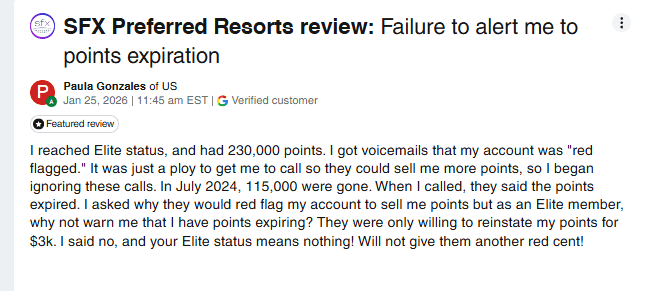
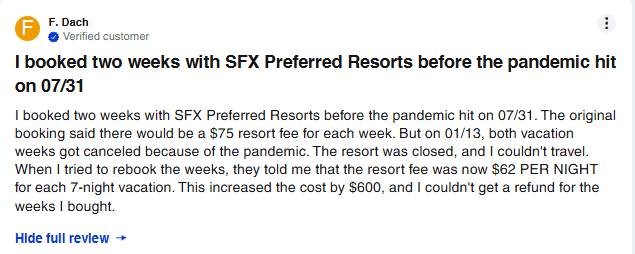
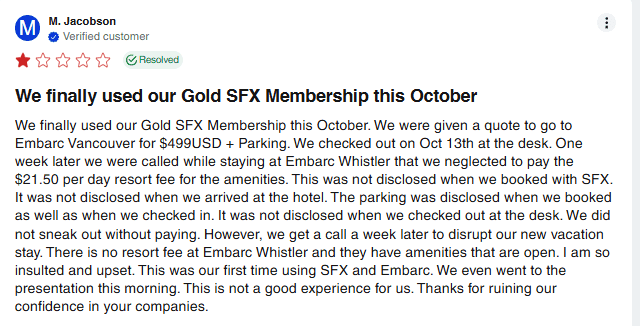

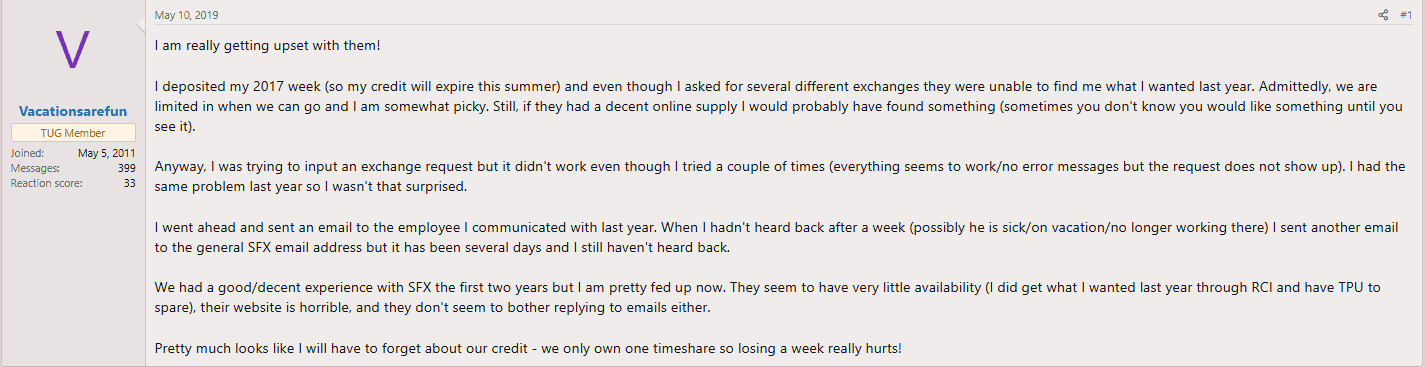
For some people, SFX works well. But for many others, these issues pile up until the membership feels more like a burden than a benefit.
Why Many SFX Members Start Looking Into Timeshare Exit Options
A common surprise for owners is discovering that their SFX membership isn’t always something they can easily cancel. Many people are introduced to SFX through a developer’s presentation or as part of a bundled contract. Once they sign, they often find out the membership is tied to broader vacation ownership obligations—meaning it’s not as simple as sending an email saying, “Cancel this, please.”
Owners usually begin exploring exit options when the membership stops providing value, when they realize the system doesn’t match their travel patterns, or when they feel misled about what SFX could offer. The inconsistency of availability plays a big role in this frustration. When a member keeps depositing weeks or paying fees without receiving equivalent access in return, the program starts to feel more like a financial weight than a vacation tool. That’s often the moment people begin researching their legal options or contacting a timeshare exit company for guidance.
Guidance Before You Seek Help
If you’re considering getting out of a contract connected to SFX, the most important first step is gathering your paperwork. That includes your original contract, any documents or brochures you were given during the sales pitch, and emails or written confirmations about what you were supposedly entitled to receive. Having this information laid out clearly makes it much easier for an exit company or attorney to determine whether your contract involves misrepresentation or contains loopholes that can be used in your favor.
A reputable company will always review your documents carefully before making promises. They’ll explain the process in detail—without resorting to scare tactics or miracle claims—and they won’t pressure you into paying everything upfront. More importantly, they’ll be transparent about the risks and realistic timelines involved. Anyone guaranteeing a fast, effortless cancellation should raise red flags immediately.
Final Thoughts
SFX Preferred Resorts sells itself as a boutique, carefully curated alternative to larger exchange companies, and for some owners, that’s enough. But for many others, the combination of inconsistent availability, unclear terms, shifting fees, and unmet expectations leaves them feeling stuck in a membership that doesn’t deliver what was promised.
If you’re in that position, you’re not alone—and you’re definitely not the first owner to seek answers about how to disentangle yourself from SFX or the timeshare program it’s bundled with. Exploring a reputable timeshare exit company can help you understand where you stand, what your options are, and whether you have grounds to walk away from a program that no longer serves you.